


Ever spotted the same Steam game for $15 less on one store and wondered what the catch is? You are not alone. Seeing wildly different prices for what looks like an identical key can feel like a scam waiting to happen. The truth is a lot less shady and a lot more interesting. Those price gaps usually come down to where the key was bought, which currency it was priced in, and when it was purchased.
Three levers do most of the work: region, currency and timing.
Why the Same Game Key Can Cost $15 Less Somewhere Else
One store lists a game at full price in your local currency; another lists it lower. That gap can come from region, currency, a past sale, or edition. Nothing about it is automatically suspicious.
Two legit sellers can list the same title far apart. The difference is a clue about sourcing, not proof of anything shady.
The gap only becomes a problem when the listing has a region lock, the wrong edition, or an activation method that does not fit your account.
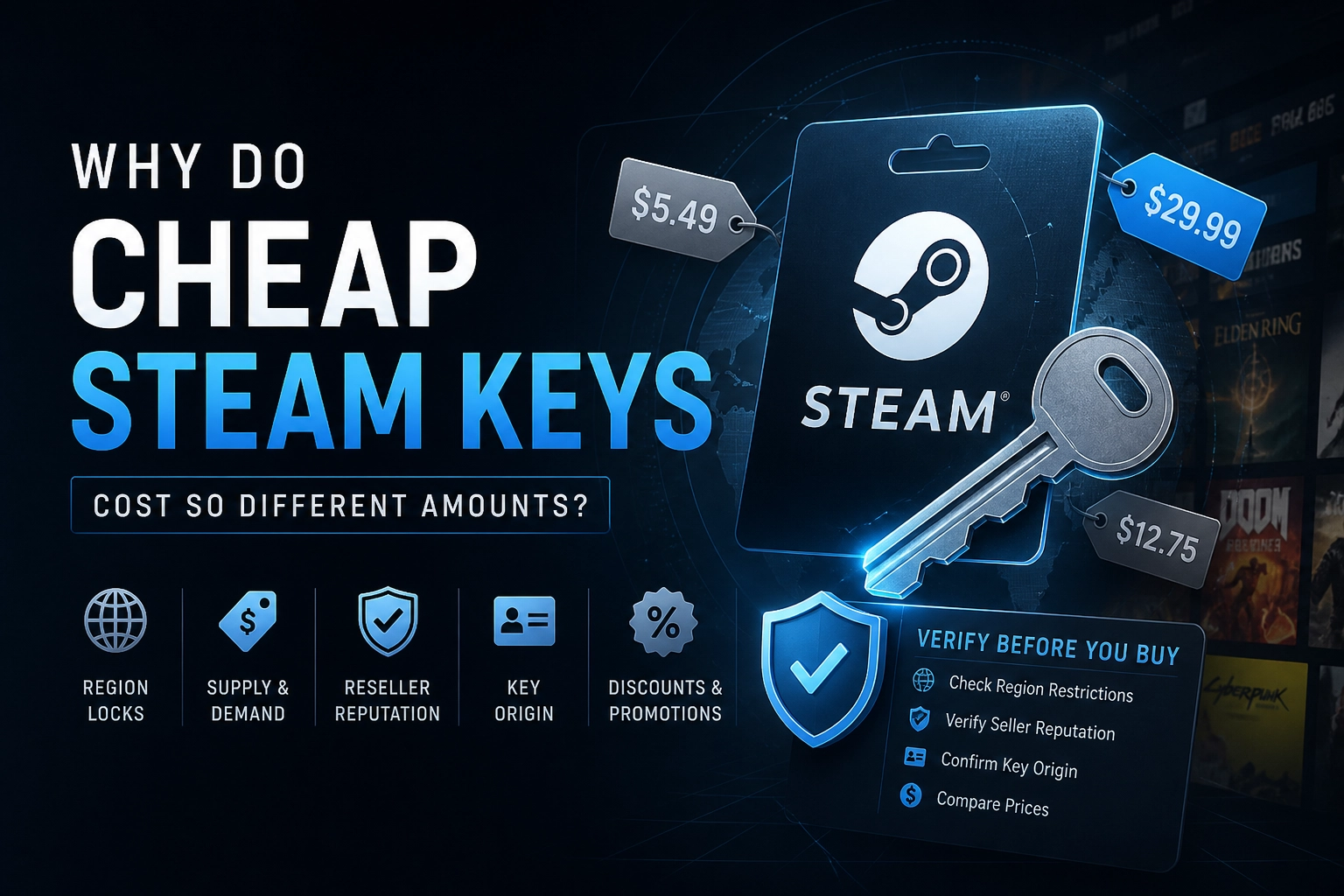
This guide covers the six things that move key prices (region, currency, retailer margin, sale timing, edition, and region restrictions), then gives you a short pre-purchase check. Searching cheap Steam keys is easy. Knowing which listing will work on your account takes about two minutes of reading the product page. That attention helps whether you're tracking Call of Duty: Modern Warfare 4 or deciding if Xbox Game Pass Ultimate is still worth it.
Regional Pricing: Why Steam Keys Can Be Cheaper in Some Countries

Region is often the biggest reason one listing undercuts another. Publishers routinely set different prices for different countries. Valve's support notes say exchange-rate volatility in Turkey and Argentina made it hard for developers to keep prices current. A key sold in a lower-priced market can be legitimate and cost far less than the US or UK store price.
That is documented practice, not a loophole. Valve's support notes that Turkey and Argentina moved to USD pricing on November 20, 2023, because exchange-rate volatility made regional pricing hard to maintain. Valve said the outcome would vary by title: some countries saw prices rise, others fall, depending on how each game had been priced before.
A cheaper key from another region is real. Whether it works on your account depends on its region restriction, covered later. It also explains why cheapest Steam keys lists go stale fast: prices are set market by market and change whenever a publisher updates a region. The same effect hits wholesale and bulk digital keys for resellers.
Currency Conversion: Why Exchange Rates Move Key Prices
Even with the region fixed, the currency a key is priced in can still change what you pay. A foreign-currency key is only cheap relative to yours at the moment of conversion. When the dollar strengthens, games priced in weaker currencies convert to fewer dollars; when it weakens, the reverse happens. The yen is a clear example. A GamesIndustry.biz column noted it lost roughly a third of its value against the dollar over a couple of years, cutting dollar revenue from yen-priced games by about the same proportion. Sellers who bought stock in one currency and sell in another either absorb that move or pass it on, so listings can drift apart even when the game itself hasn't changed. That is why a key can look noticeably cheaper one month and nearly level the next with no sale involved. Before buying, check the listing currency and any conversion fee your card adds, then compare the delivered total with the store price.

Retailer Margin, Wholesale Cost and Taxes
Currency conversion is only one lever. Retailers also buy keys at wholesale and set their own margin, so a shop running lean can list lower than one covering more overhead. That is normal competition, not a red flag. Tax treatment adds another gap: UK price-transparency rules require the total, mandatory taxes and fees included, to be shown before you pay, so compare delivered totals rather than headline numbers. Bundles muddy it further, since a key from a bundle or bulk buy may be resold below list by a seller clearing stock. That is general mechanics, not a knock on any one shop. The practical habit is simple: compare the delivered total, tax and fees included. For a baseline on how a marketplace presents products, start where everyone else does, then check checkout before you pay.
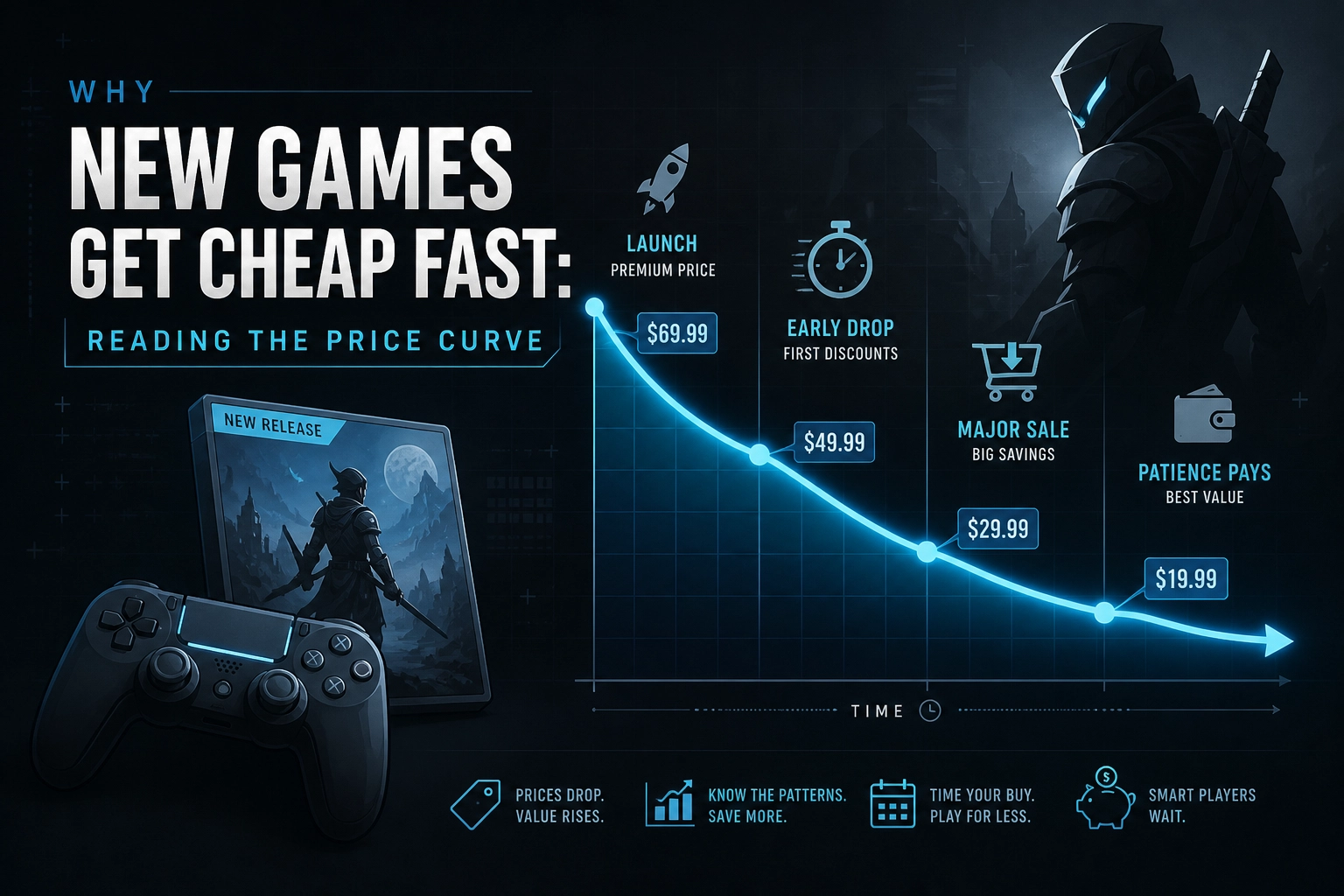
Sale Timing: Why the Price Changed Since Last Week
Margin and tax explain part of the spread, but timing explains a huge share of the gap between cheap keys and full-price listings. A store sale can end overnight, so a listing you saw on Tuesday may be back at full price by Friday. That is normal, not a bait and switch.
A listing can also sit below full price with no live promotion, if the seller is still working through stock bought during an earlier sale. Price history tools help here: they show whether a discount is new or just the same recurring sale, so you can judge whether waiting helps or wastes time.
Publisher events, seasonal sales, and launch-window promotions hit the same title at different moments, so two stores may be days apart in the same discount cycle. No single calendar is reliable across every platform, so check the current listing and the game's own price history rather than assuming a pattern will repeat.
Edition Confusion: Standard, Deluxe and GOTY Keys
Timing explains some gaps, but sometimes the two listings aren't even the same product. A standard key, a deluxe key with extra content, and a complete or GOTY edition all carry different price tags. Bundle contents shift over time, too. A re-release that folds in the DLC can cost less than buying the base game plus add-ons separately, while older bundle keys may not include everything the current store page describes. Expansion passes and DLC are often sold on their own, so a surprisingly low price may just be the base game with none of the extras. Platform matters as well: a code for one launcher or console family won't redeem on another even if the artwork looks identical. That's why it pays to know which console you actually play on. Edition names such as Vault Edition are a clue to read the contents, not a guarantee. Before you compare prices, check the exact edition name, what it includes, and where it activates.
Region Restrictions: Will This Key Activate on My Account?
Even with the correct edition in hand, the key still has to match your account's country. A region lock is a restriction that prevents a key from being redeemed on an account registered in a different country. Some keys are global, while others are tied to a single country or a group of countries, and the listing should say which one you are buying.
If the listing does not state a region, assume the region matters and ask the seller before you pay, not after the code fails. Normal activation means entering the code yourself on the platform's store or launcher. Account-based or offline activation is a different arrangement with different risks, so read that part closely.
Treat a VPN suggestion as a warning sign rather than a workaround, and read the platform's own terms before you buy.
Region and currency overlap here. The key priced for a cheaper market is often the same key carrying the restriction, so the lowest number is not automatically right for your account.
How to Check a Key Listing Before You Pay
With the region question settled, run this five-point check before you pay.
Match the platform. Confirm the key redeems on Steam, Epic, Xbox, PlayStation, or the store you actually use, not another launcher that also sells the game.
Check the stated region. Look for a specific country, a clear global tag, or an explicit activation restriction. If none appears, ask the seller.
Confirm the edition. Read the full product name and included content so a base game is not compared to a complete edition.
Read delivery and activation. An instant code and manual or account-based activation carry different time and risk. Anywhere you buy, including ElectronicFirst, platform and region should be plain before checkout.
Check the refund position. A non-activating key needs a clear refund route, and that policy belongs in your decision before payment.
If you sell keys yourself, become a partner.
Red Flags That Mean a Key Will Not Work on Your Account
You have run the checks. Now watch for signs the code itself is trouble.
A price far below every other store with no sale, bundle, or edition behind it. Real discounts have a reason you can trace.
No region stated, or wording that leaves activation scope vague. Gift cards follow similar rules, and our Roblox gift cards explained guide shows how region and redemption errors play out.
Any request for your account login, or an offer to activate the game for you. A normal purchase gives you a code you redeem yourself.
"Permanent access" tied to a shared or rented account instead of a key on your own account. That is a different product.
No refund route and no way to reach the seller if the code fails. That turns cheap into expensive.
What Rising Prices and New Rules Mean for Cheap Steam Keys
Those red flags matter more when list prices move. Newzoo's 2026 forecast puts console game revenue at $46.9bn, up 5.1 percent year on year, so the list price you benchmark against keeps moving. When list prices climb, genuine discounts are worth tracking more closely. Unrealistic listings also stand out faster, since a huge gap from every other store becomes easier to question.
Regulators are watching price clarity too. On September 30, 2026, the EU Consumer Protection Cooperation Network launched coordinated actions against nine games companies, with principles calling for real-world prices and fewer confusing multiple currencies. Those principles target in-game currencies, not Steam key sellers, so treat them as a direction of travel on transparency, not a rule that changes how keys are priced today.
Your job stays the same: work out why a price is low, and confirm the listing matches the account you want to play on before any money moves.
The Short Version: Know Why It Is Cheap Before You Buy
None of that changes the basic math. When one listing is $15 cheaper than another, it is rarely one thing. Usually it is region, currency, seller margin, sale timing, edition or a region restriction, and often two or three of those stacked together. That is not a reason to walk away. It is a reason to look closer.
If a listing cannot explain its own price, especially on region or activation, treat that as a question rather than a bargain. A cheaper key with clear details is a good buy. A cheaper key that will not activate is just a refund request. Spend the two minutes first. A low price is not automatically a bad sign; it is a prompt to check the details before you commit.
Conclusion
Cheap Steam keys cost different amounts for a reason, and now you know where to look. The price gap between listings usually comes down to region, currency, seller margin, sale timing, edition or region restrictions, often stacked together rather than sitting behind one single cause. A low price is not automatically a bad sign; it is a prompt to check the details before you commit.
Your next step is simple. Before any money moves, confirm the platform, region, edition, activation method, delivery and refund terms on the listing. Spend those two minutes and the discount becomes a smart buy rather than a refund request. Buy with your eyes open, and every cheap key can be a genuinely good deal.